The Shot Is Not the Strategy
Treating biology instead of chasing vanity
BY BARRY BREAUX, MD, MBA · July 2, 2026
A strange thing happens when a medication becomes culturally famous. The conversation stops being clinical and turns moral.
That is what happened with GLP-1s.
Ozempic. Wegovy. Mounjaro. Zepbound. Depending on who's talking, they're miracle drugs, cheating, dangerous shortcuts, vanity medicine, or the end of diet culture.
Most of those takes are too small.
When people call these "weight-loss drugs," I cringe. They do help people lose weight — that's the quick and dirty of it. But that framing makes them sound optional and cosmetic, and as a physician board-certified in Obesity Medicine, I'll tell you why it misses the larger story.
These medications treat the biology of obesity and metabolic dysfunction. Obesity care isn't about making everyone smaller. It's about reducing the risk of complications: cardiovascular disease, obstructive sleep apnea, kidney and liver disease, diabetes, mobility loss, and obesity-associated cancers.
The real GLP-1 story isn't that people are losing weight. It's that medicine is finally treating metabolic disease like biology instead of character.
The turning point I missed
In residency, a patient came to me wanting to lose weight, and I felt insincere handing her the "eat less, move more" advice coupled with a nutrition referral, which I knew was unlikely to work on its own. I had also been taught the cautionary tale of the 1990s "fen-phen" clinics (the drug ultimately pulled for serious side effects) so I assumed there was no free lunch in medication-assisted weight loss.
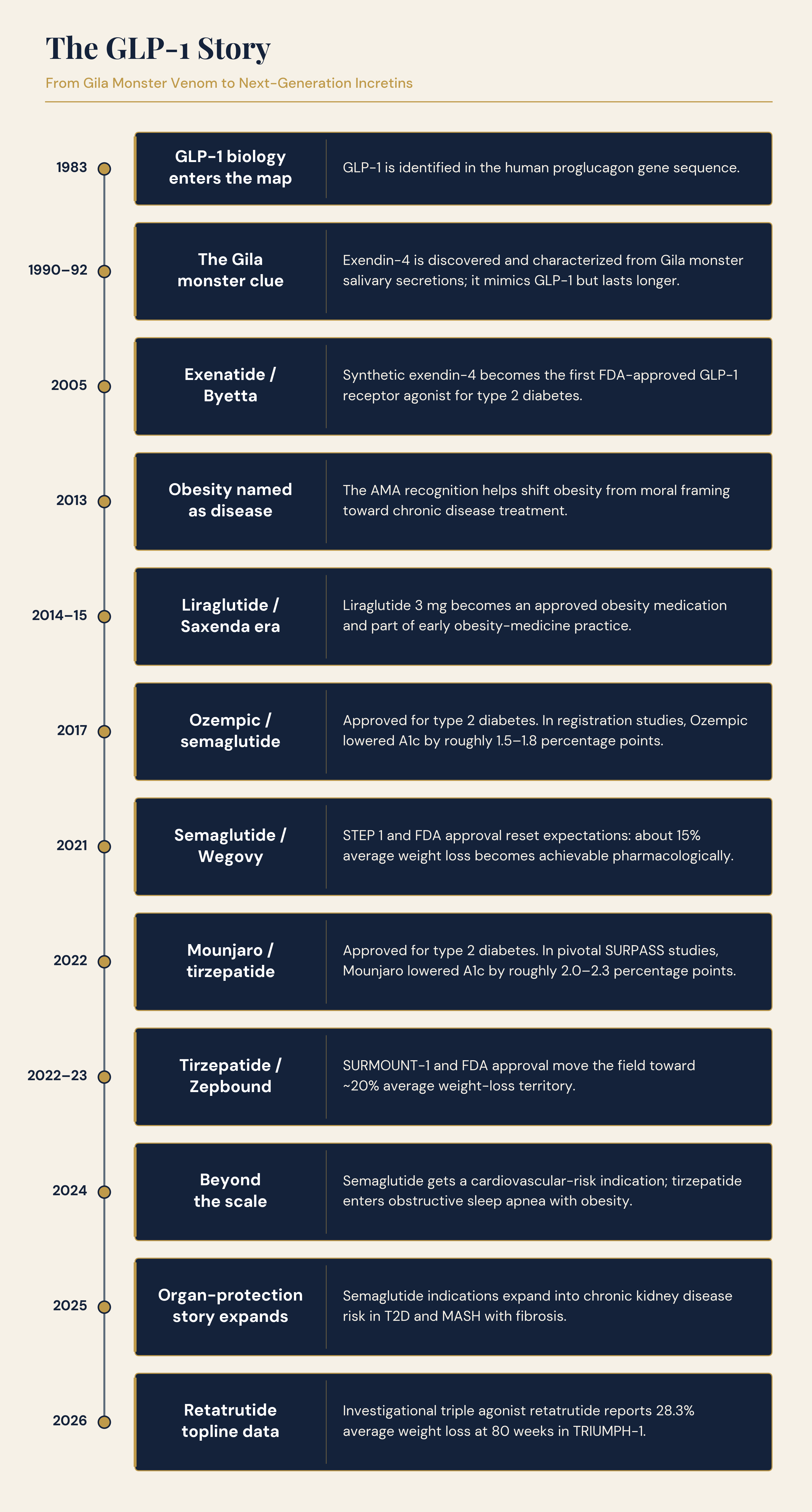
Then I reviewed the research and found a medication approved as treatment: liraglutide. It produced a modest effect as a daily injectable, but still, it was approved to treat obesity along with several other drugs previously approved for “chronic weight management.” The year was 2015, I was in training, and no one taught me that the American Medical Association had declared obesity a disease in 2013 — the year I graduated medical school.
That decision didn't fix stigma, access, reimbursement, or training. But it changed the premise. Obesity could be treated as a chronic disease with real pathophysiology, not a personal failing. It opened a cultural door and the research and reimbursement doors behind it.
I became a certified Obesity Medicine specialist in early 2021 (what else was there to do in the early pandemic?), just before Wegovy's approval. My training had prepared me to pair older anti-obesity medications with intensive lifestyle work. Wegovy changed the conversation but not for everyone. Many of us still reach for older drugs when the newer ones aren't tolerated, covered, available, or the right fit.
GLP-1s didn't invent obesity medicine. They changed its center of gravity.
A normal BMI is not the goal
This is where the public conversation goes wrong. A normal body mass index isn't the goal of obesity care. Lower complication risk and better metabolic health are. That means better sleep, mobility, blood pressure, glucose control, liver and kidney risk, and a plan the patient can actually live with.
For some people that means large weight loss. For others, a 5–10% reduction can meaningfully improve health markers even if they never reach a "normal" BMI. That's not lowering the bar. It's practicing medicine, which requires treating the whole person with lifestyle and behavioral support, not just the number on the scale.
What GLP-1s actually do
GLP-1 (glucagon-like peptide-1) is part of the body's normal post-meal signaling. These medications amplify signals tied to appetite, satiety, glucose regulation, and gastric emptying.
The practical version: they turn down the biological pressure to eat, or what many people call "food noise."
That matters because for most people with obesity, the problem was never a lack of information. People know vegetables exist. The issue is everything underneath the surface: appetite, reward, insulin resistance, weight regain, stress, sleep, medication exposure, trauma, environment, genetics. GLP-1s don't erase those variables. They change the terrain in which they exist and dial down their influence.
The data changed the conversation
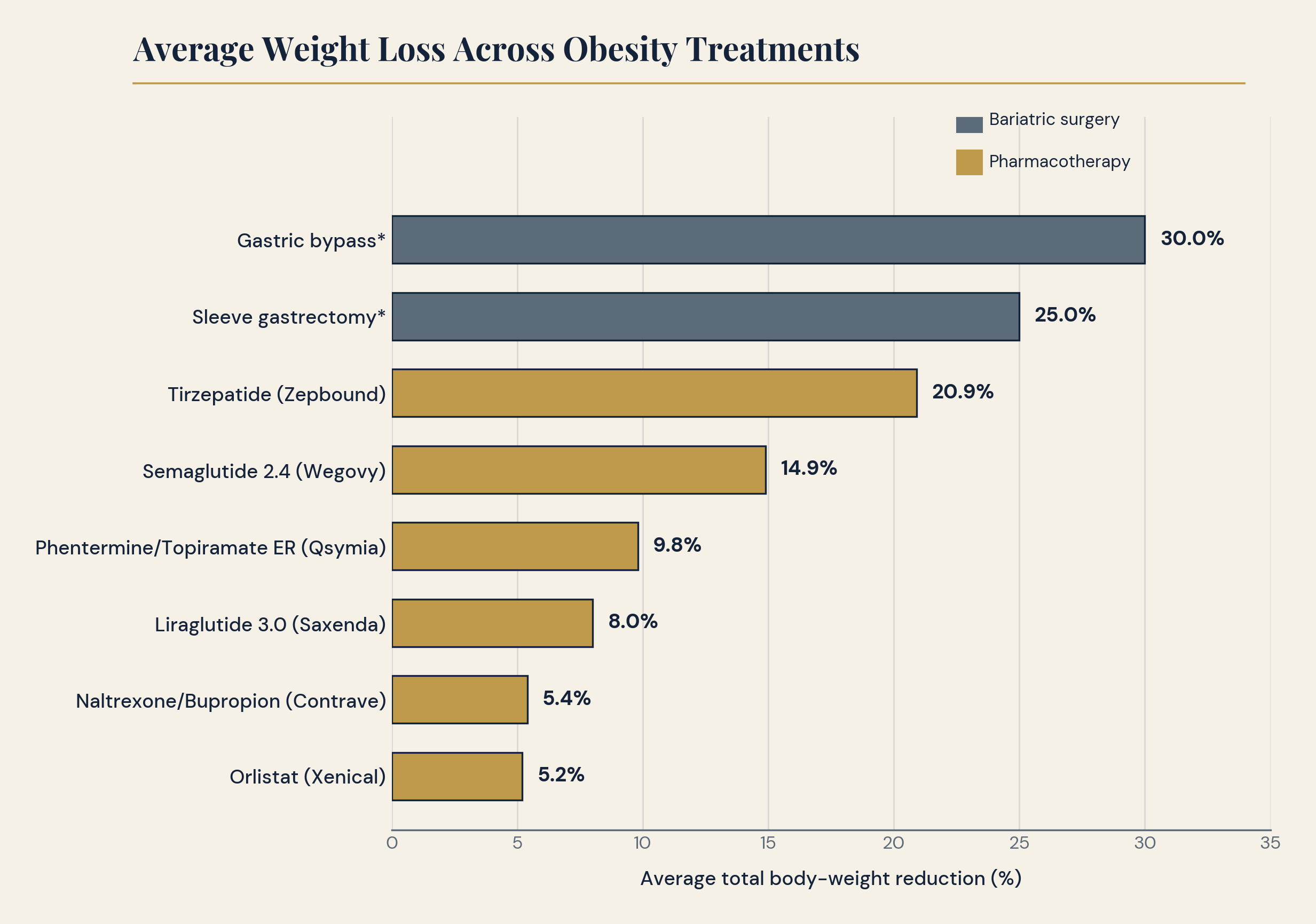
For decades, obesity medications produced modest results. Then the incretin era arrived. Semaglutide reset expectations. Tirzepatide raised them. Retatrutide — based on its Phase 3 topline data (28.3% average weight loss) — suggests the next wave may push further still.
The point isn't that one drug beats another. It's that we're no longer talking about marginal pharmacology. These medications can produce clinically meaningful changes in weight, cardiometabolic risk, and disease trajectory.
These aren't "weight-loss shots." They're cardio-kidney-metabolic medicines.
The benefits are broader than the scale
The scale gets the attention. The risk reduction is the bigger story.
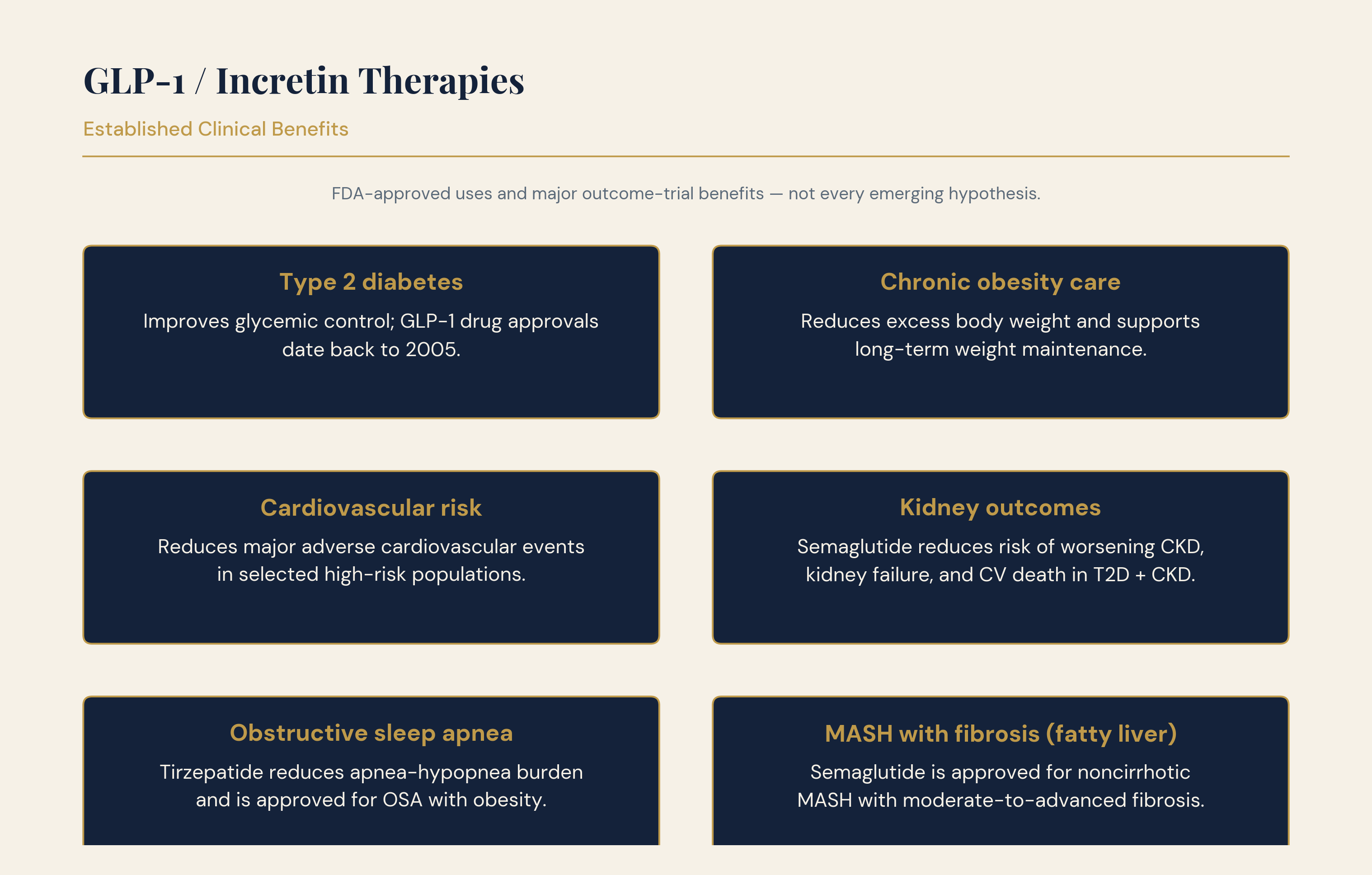
Wegovy carries a cardiovascular-risk indication for adults with established cardiovascular disease and obesity or overweight. Zepbound is approved for moderate-to-severe obstructive sleep apnea in obesity. Semaglutide's indications have expanded into chronic kidney disease risk in type 2 diabetes and into MASH ("fatty liver") with fibrosis.
The cardiovascular and kidney indications, in particular, don't rest on weight loss as a stand-in for benefit. They rest on large outcome trials (SELECT and FLOW) that measured hard events: heart attack, stroke, kidney failure, cardiovascular death. That's the signal. The category is moving from weight management into organ-protection (longevity?) medicine.
The chronic disease problem
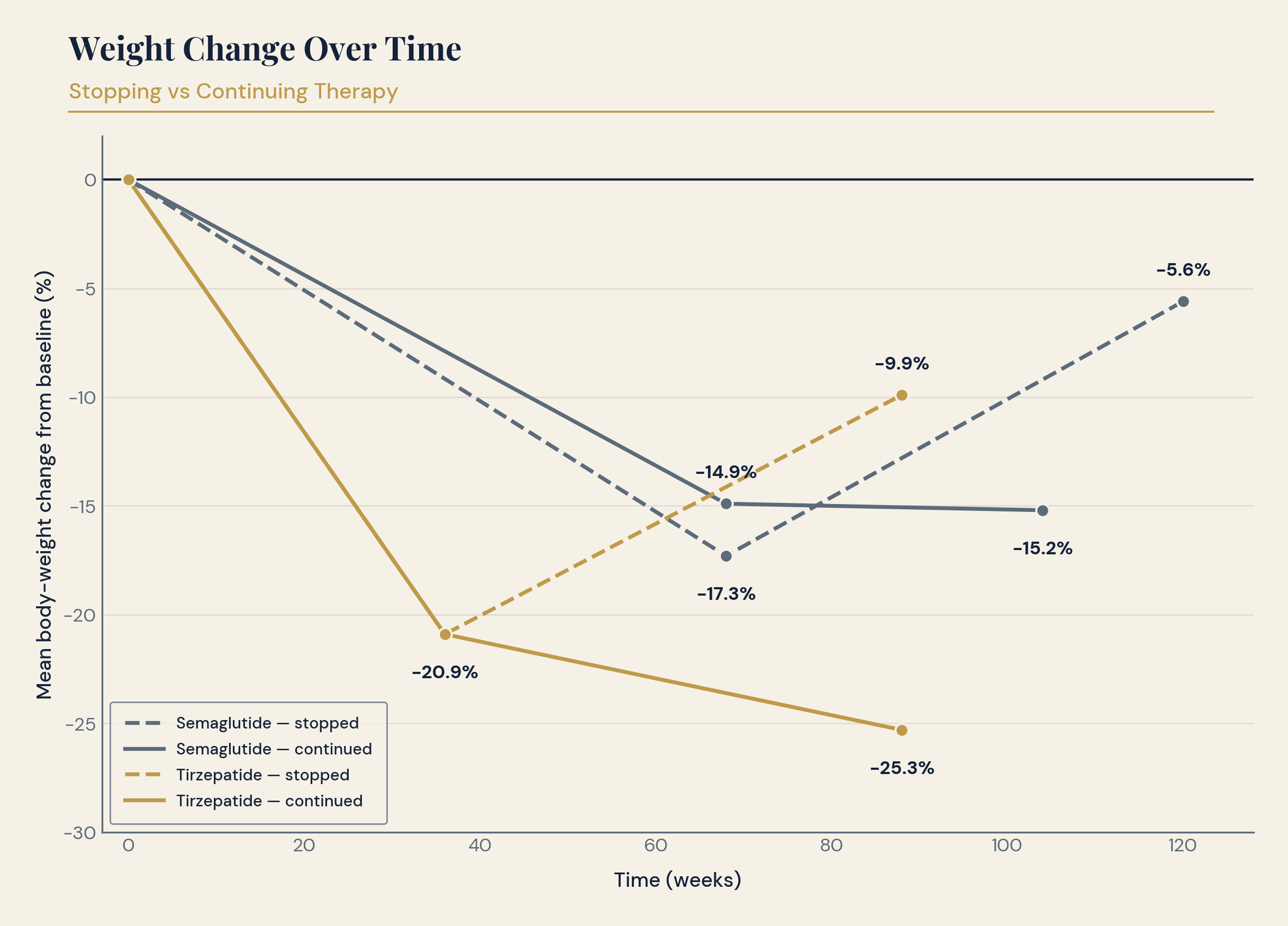
One of the most uncomfortable pieces of GLP-1 data: when people stop, weight tends to come back. That sounds discouraging, but it shouldn't surprise anyone.
We don't call blood pressure medication a failure when pressure rises after stopping it. We don't call statins a scam when LDL cholesterol climbs back. Obesity is chronic. So is hypertension. So is diabetes. So is asthma. So is, for many, depression.
Culturally, we still want obesity to behave like a 12-week challenge from start to finish, but the biology doesn't care about our preferred timeline.
The muscle and bone question
There's another issue worth getting right: body composition. Weight loss isn't automatically health gain.
When someone loses significant weight, some comes from lean mass, which is true of dieting, surgery, and medications alike. But lean mass isn't the same as muscle. On a DEXA scan, the way body composition is commonly measured in studies, "lean mass" includes water, organs, and connective tissue, not just skeletal muscle. Plus, the scan cannot distinguish between healthy muscle, the fat between muscle fibers (think marbling on a steak), and fat within muscle cells. This is fat that you want to get rid of, yet it’s all “lean mass” on the report. So when someone says a GLP-1 caused "muscle loss," they're often collapsing a complicated measurement into a scarier phrase.
The concern is real. The panic is usually sloppy.
The goal isn't a smaller number. It's better metabolic health with strength, mobility, bone health, and function preserved. That means GLP-1 care should include a plan for adequate protein, resistance training, weight-bearing movement, hydration, constipation prevention, and monitoring — not in a punitive "earn your medication" way, but in a clinical "protect the patient" way.
The medication works. The system is the problem.
The most important question in GLP-1 care isn't "Does the drug work?" For many patients, it does. The better questions are harder. Can the patient access it? Tolerate it? Afford it? Stay on it? Are they losing fat while preserving strength? Eating enough protein? Are we treating the whole person, or chasing the scale?
Dose, titration, side effects, follow-up, nutrition, sleep, and a patient's relationship with food, body image, and control all matter. A prescription is not a care model.
Access is becoming the real bottleneck
The next phase of GLP-1 medicine won't only be about efficacy. It'll be about access. Demand is high, coverage inconsistent, prior authorization burdensome, cash-pay expensive. Compounded and counterfeit products have created real safety concerns.
This is what happens when clinical demand outruns infrastructure. People don't stop wanting treatment because the system is slow; they look for alternatives. Some legitimate, some risky, some predatory. That's why access isn't a side issue. It's a safety issue.
My read
I don't think GLP-1s are magic bullets for health in isolation. I also don't think they're cheating. I think they're powerful tools that force everyone (medicine, employers, insurers, clinicians, patients) to answer a more honest question: are we willing to treat metabolic disease like a chronic condition, or only when we can pretend it's a personal failure?
The future of this care shouldn't be a subscription box, a celebrity secret, or a shame-based shortcut. It should be clinical, monitored, and paired with nutrition, movement, strength, sleep, and behavioral support. It should reach the patients most likely to benefit, and it should be discussed without the moral theater.
Treating it as biology means following the evidence even where it contradicts the story we would prefer — that obesity is a character problem with a character solution. Because the shot is not the strategy. The strategy is building care around the biology and the lived reality of the unique individual.
To the joy of living proactively,
Barry
Source notes
- 1AMA recognizes obesity as a disease; AACE/ACE guidance frames it as a complex chronic disease targeting both adiposity and weight-related complications.
- 2Exendin-4 was identified from Gila monster venom/salivary secretions; synthetic exendin-4 became exenatide, approved in 2005.
- 3Saxenda (liraglutide) approved for chronic weight management since December 2014 — the residency-era context.
- 4Weight-loss figures draw mainly from STEP 1, SURMOUNT-1, and SURMOUNT-5.
- 5Weight-regain figure: semaglutide (STEP 1 extension) and tirzepatide (SURMOUNT-4) withdrawal data.
- 6Body-composition section: semaglutide/tirzepatide DEXA substudies; DEXA-derived lean mass is an imperfect proxy for muscle. Bone point from a randomized trial of exercise, liraglutide, and bone mineral density.
- 7Broader benefits: FDA approvals for CV risk reduction (Wegovy), obstructive sleep apnea (Zepbound), MASH (Wegovy), and kidney-risk reduction (semaglutide in T2D with CKD).
- 8Obesity-associated cancer framing is about obesity as a risk factor, not a proven GLP-1 prevention indication (NCI/CDC).
- 9FDA has warned about unapproved/compounded GLP-1 products, dosing errors, and adverse events including hospitalization.
- 10Retatrutide remains investigational. Lilly's May 2026 TRIUMPH-1 topline reported 28.3% average weight loss at 80 weeks (12 mg), with 30.3% at 104 weeks in a higher-BMI subgroup.
Medical information disclaimerThis is general education, not personal medical advice. GLP-1 and GIP/GLP-1 medications have contraindications, side effects, and monitoring needs. Decisions about starting, stopping, switching, or compounding should be made with a qualified clinician.